
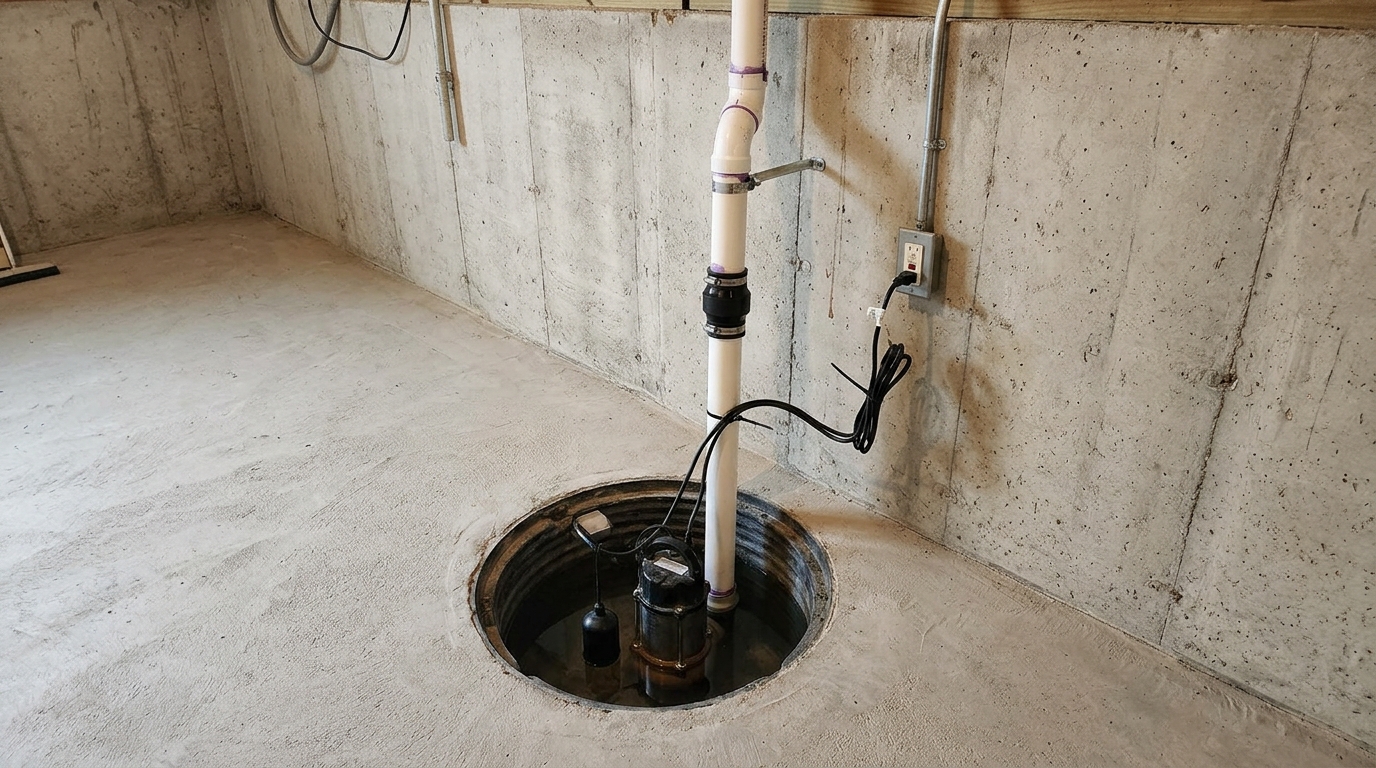
What houses need sump pumps?
Houses are most likely to need sump pumps when groundwater or drainage conditions can allow water to collect below grade, especially in basements and crawl spaces. A high water table, heavy precipitation, poor soil drainage, low lot elevation, or a history of basement moisture can all make a sump system useful for controlling incoming water.
Which home features make a sump pump more useful?
Basements and crawl spaces create below-grade areas where groundwater can become a problem if drainage around the foundation is not enough. Many sump systems work with drain tile or another foundation drainage path that directs water toward a pit. As water collects in the pit, the pump sends it away from the building before the level rises into the basement or crawl space. The need depends on how water behaves around the particular foundation, not simply on whether the house is old or new.
A history of wet basement walls, water entering after storms, damp crawl-space conditions, or a sump pit that regularly receives groundwater are practical signs that active pumping may be part of the home’s drainage strategy. In Milwaukee, Wisconsin, spring rain and melting snow can increase groundwater and expose weak drainage conditions. A house that stays dry because a sump pump is operating should not be assumed to have no water pressure around the foundation.
Do all houses with basements need sump pumps?
No. Some basements remain dry because the site drains well, groundwater stays below the foundation, and the building’s drainage system controls water without an active pump. Other homes may have a sump pit because local construction practices, past water conditions, or the drainage design called for one. The presence or absence of a basement alone does not answer the question. The actual water history and drainage setup matter more.
Homes without basements can also use sump pumps in certain crawl spaces or other below-grade drainage applications. Conversely, a house with a finished basement may rely heavily on a sump system because water entering that space could affect flooring, walls, storage, and living areas. Milwaukee properties should be evaluated individually based on lot grade, foundation drainage, visible moisture, high-water history, and whether an existing sump pit receives water during wet periods.
What should you check when evaluating a home’s sump needs?
Look for a sump pit, perimeter drain or drain-tile system, signs of past water entry, staining on lower walls, efflorescence, dampness, musty odors, and records of previous basement water problems. Outside, consider whether the lot slopes toward the house or whether downspouts and surface drainage send water near the foundation. These observations do not replace a drainage evaluation, but they help explain why a particular house may depend on a sump pump.
If a pump is already installed, test its operation and inspect the discharge path instead of assuming the system is unnecessary. A functioning sump pump can be evidence that the home has an established method for managing groundwater. The answer is therefore risk-based: homes with below-grade spaces and water conditions that can overwhelm passive drainage are the ones most likely to benefit from a properly designed and maintained sump system.
FAQ
Does every basement need a sump pump?
No. Some basements remain dry without one because groundwater and site drainage are favorable. The home’s water history, foundation drainage, and local conditions determine whether active pumping is needed.
Can a crawl space need a sump pump?
Yes. A crawl space can need active drainage when groundwater or surface water collects below the building and a properly designed sump system is part of the moisture-control plan.
Why does a sump pit fill after rain?
Rain can raise groundwater or increase the amount of water reaching foundation drainage. The drainage system may direct that water into the sump pit so the pump can discharge it away.
Should an existing sump pump be tested before buying a house?
Yes. Testing operation, checking the pit and discharge path, and reviewing signs of past water entry can help you understand how the home’s drainage system is functioning.
What houses need sump pumps?
Houses are most likely to need sump pumps when they have a basement or crawl space that collects groundwater, sit in an area with heavy precipitation or a high water table, or have foundation drainage that directs water to a sump pit. In Milwaukee, local soil, lot drainage, snowmelt, and basement history should all be considered before deciding.
Conclusion
Homes with basements or crawl spaces are most likely to need sump pumps when groundwater, precipitation, lot drainage, or foundation conditions can bring water below grade. The need should be based on the property’s actual drainage behavior and history.
If you are evaluating an existing sump system in Milwaukee, Knight Plumbing can have a plumber inspect the pump, pit, discharge path, and related components and explain whether the system is operating as intended.
Related Service: Sump Pump Installation