
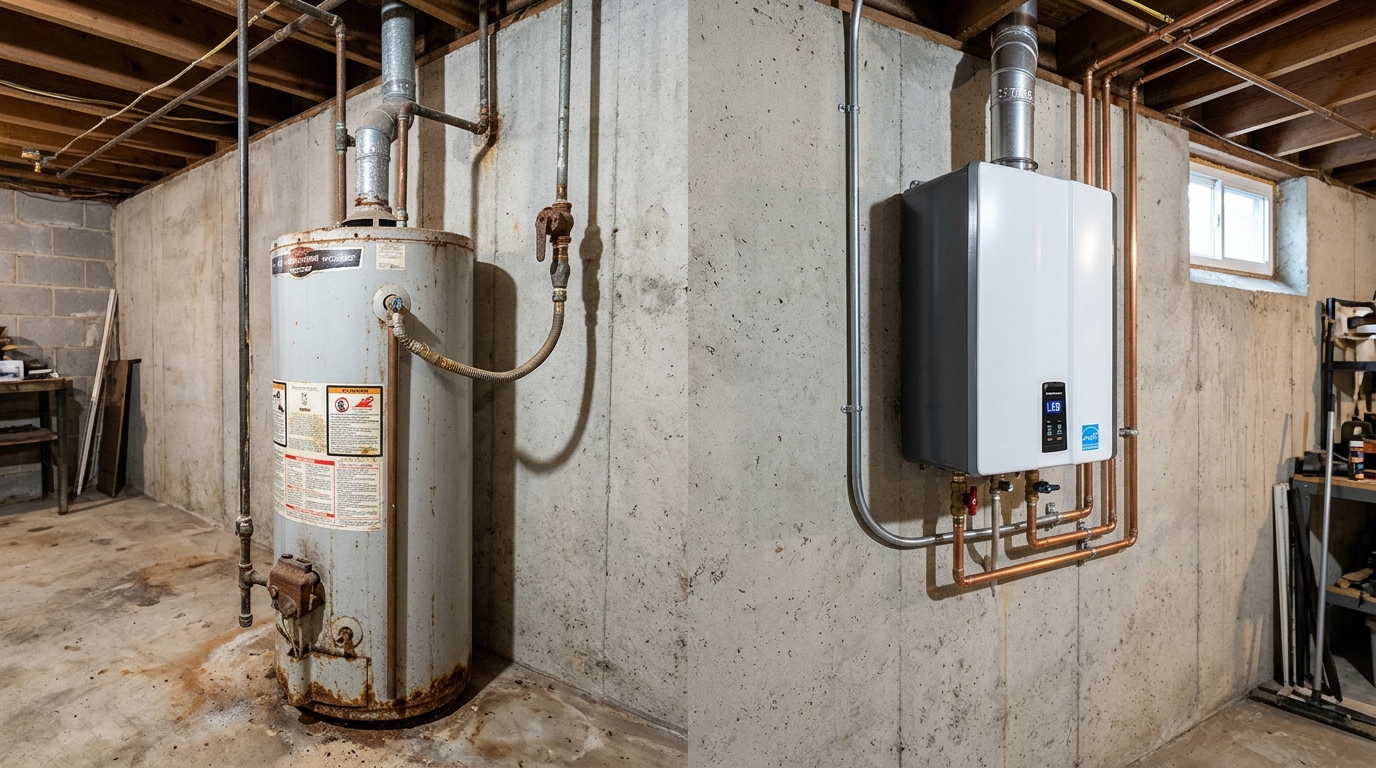
Is it worth fixing a 20 year old water heater?
Usually, fixing a 20-year-old conventional tank water heater is not the most practical long-term choice, because the unit is already at an advanced age and another component may fail after the repair. Tankless models can age differently, so the best decision should consider heater type, condition, leakage, performance, and the specific repair required.
Why does the age of a water heater matter?
A water heater is made up of a tank or heat exchanger, heating components, controls, valves, fittings, and other parts that age together. Replacing one failed component does not reset the age of the rest of the equipment. On an older conventional tank, corrosion, sediment, weakened connections, and declining performance may be developing at the same time. That is why a repair that makes sense on a younger unit can be less attractive when the heater has already been operating for two decades.
The type of heater matters, too. A conventional storage-tank unit and a tankless water heater do not have identical service expectations or failure patterns. A 20-year-old tank heater generally deserves a serious replacement discussion, while an older tankless system may still justify diagnosis depending on its maintenance history and condition. In Milwaukee, Wisconsin, a plumber can identify the equipment type and visible condition before recommending water heater repair or replacement.
What problems make replacement more sensible than repair?
Active tank leakage is one of the strongest reasons to consider replacement because a leaking storage tank itself is not typically corrected by replacing a small external component. Visible corrosion, cracking, repeated loss of hot water, persistent temperature problems, or recurring repairs can also shift the decision toward replacement. Strange popping or rumbling may indicate sediment or other conditions that deserve inspection, especially when they appear together with age-related deterioration.
The repair itself also matters. A small serviceable component on an otherwise sound system is different from a repair that costs substantial time and parts while leaving a very old tank in place. Instead of looking only at whether a repair is technically possible, consider whether the heater is structurally sound, whether it has leaked, whether multiple problems are appearing, and whether reliable hot water can reasonably be expected after the work. That broader view helps avoid treating each symptom as an isolated event.
How should you decide whether to repair or replace?
A useful evaluation starts with the heater’s type, age, maintenance history, tank condition, venting or electrical setup, water connections, safety controls, and the exact failed component. The plumber can then explain which parts are repairable and whether the remaining equipment appears sound enough to justify that repair. This keeps the decision focused on the actual condition of the unit rather than using age as the only factor.
For a 20-year-old conventional tank water heater, replacement is commonly the more practical direction even if a repair can restore operation temporarily. Milwaukee homeowners with a tankless unit of the same age should still have it evaluated rather than assuming the answer is identical. The key is to weigh the repair against the condition of the whole heater, not just the single part that failed today.
FAQ
Can a 20-year-old water heater still be repaired?
Sometimes a specific component can be repaired, but repairability does not necessarily make the repair the best long-term choice. The heater’s type, tank condition, leakage, and overall wear should be considered.
Does a leaking 20-year-old tank water heater need replacement?
A leak from the storage tank itself is a strong replacement indicator. A plumber should identify whether water is coming from the tank or from a repairable valve, fitting, or connection.
Is a 20-year-old tankless water heater automatically worn out?
Not necessarily. Tankless systems can have different service lives than storage-tank heaters. Condition, maintenance history, parts availability, and the specific problem should be evaluated before deciding.
What should a plumber inspect on an old water heater?
The inspection can include the tank or heat exchanger, connections, controls, heating components, signs of corrosion or leakage, safety devices, and the specific cause of poor hot-water performance.
Is it worth fixing a 20 year old water heater?
Usually, repairing a 20-year-old conventional tank water heater is not the best long-term choice because age makes additional failures more likely, even when one component can be fixed. Tankless systems can have different service lives, so Milwaukee homeowners should have the unit’s type, condition, leak history, and repair needs evaluated before deciding between water heater repair and replacement.
Conclusion
A 20-year-old water heater can sometimes be repaired, but age changes the value of that repair. On a conventional tank unit, replacement is often the more practical choice when corrosion, leaks, recurring problems, or major component failures are present.
Knight Plumbing can evaluate an older Milwaukee water heater and explain whether water heater repair is reasonable or whether replacement better fits the unit’s condition. The goal is to base the decision on the actual equipment, not on age alone.
Related Service: Water Heater Repair